

- Home
- Drain Cleaning
Water that has nowhere to go finds somewhere expensive.
Buried downspout lines, catch basins, area drains and French drains — cleared, flushed and tested before the summer rains prove the point for you.
The drainage nobody thinks about until it fails.
Every property here has a buried system quietly moving thousands of gallons away from the foundation. It silts up gradually, and the first sign is usually a lake where the lawn used to be.
- Buried downspout lines — the pipe from the gutter outlet to wherever it discharges, cleared root-to-outlet.
- Catch basins and yard inlets — excavated of silt and debris, grates cleaned and reseated.
- Area and trench drains — the channel drains across driveways, garage aprons and pool decks.
- French and perimeter drains — flushed through and tested for flow along the full run.
- Pool deck and patio drainage — the low-point drains that quietly fill with sand and leaf litter.
- Discharge points and pop-up emitters — located, cleared and confirmed actually running.
To be clear about scope. This is exterior stormwater and site drainage. Interior plumbing — sinks, showers, toilets, sewer laterals and septic — is licensed plumbing work, and we will refer you to a licensed plumber rather than pretend otherwise.
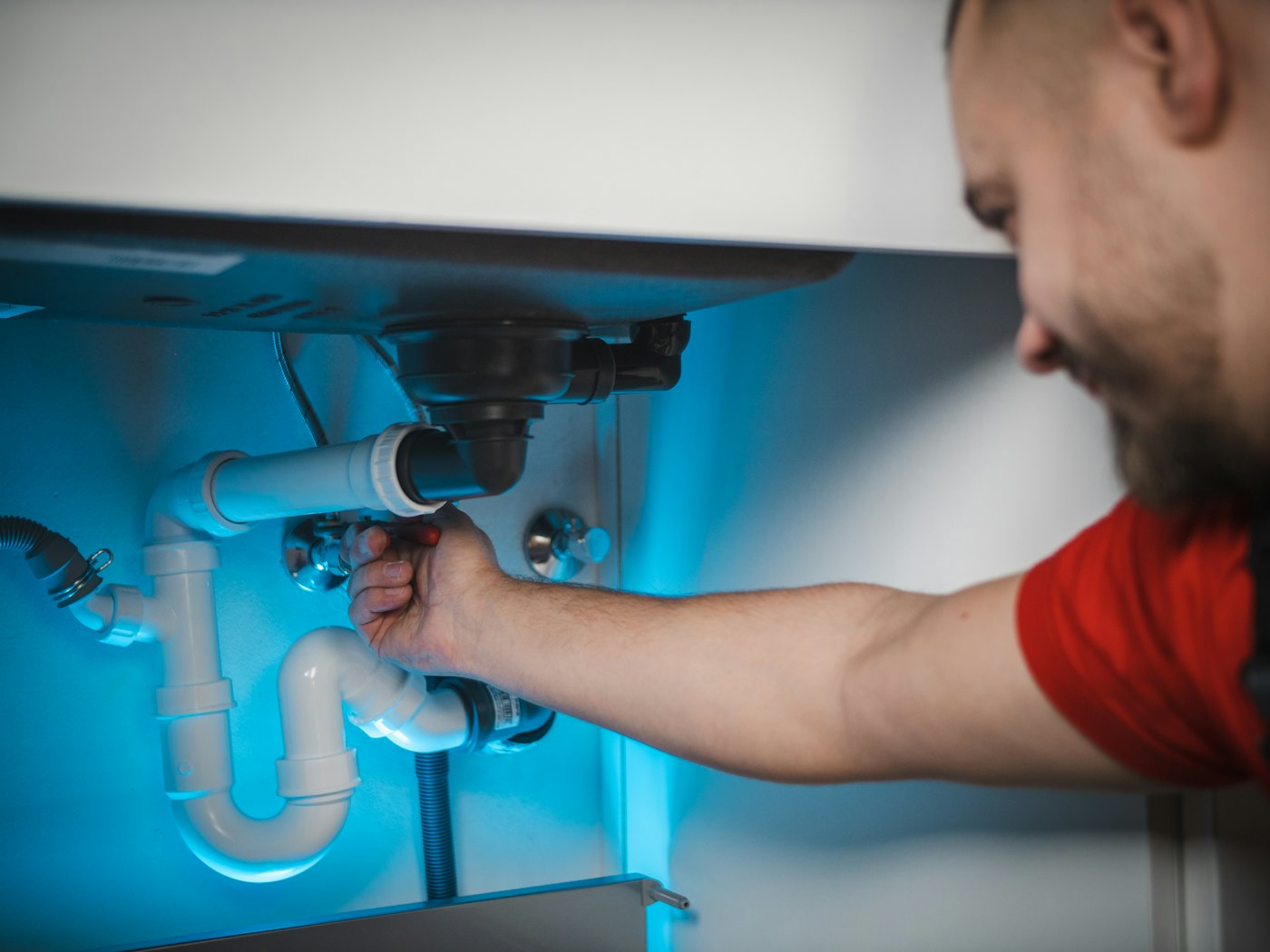
If you have seen any of these, the system is already blocked.
Water pooling after rain
Puddles that sit for more than an hour on lawn, driveway or pool deck mean the drainage has stopped moving water, not that the rain was unusual.
Gutters overflowing at the corner
Often blamed on the gutter. Just as often it is the buried line below the downspout backing up and refusing to take the water away.
Mulch and soil washing out
Water that cannot get into the drain travels across the surface instead, taking beds, mulch and eventually the grade with it.
Damp at the foundation
Staining, efflorescence or persistent damp along the base of the wall is water sitting where the drainage was meant to take it away from.
Slow or gurgling yard drains
A grate that takes water away lazily, or burps as it drains, is partially blocked. It will finish blocking at the least convenient moment.
Mosquitoes and smell
Standing water in a basin is a breeding site and an odour source. Both clear up when the system moves water again.
Find it, clear it, prove it is gone.
Locate and map
We find every inlet, outlet and emitter on the property — including the ones that have been buried under sod or mulch for a decade.
Diagnose the blockage
Silt, root intrusion, a collapsed section or a bad original slope all look identical from the surface and need completely different answers.
Clear the line
Mechanical clearing and high-volume flushing from the inlet through to the discharge, until the full run is moving freely.
Test and document
We run real water through it while you watch, then send photos and, where useful, camera footage of the cleared line.
Straight answers
What does it cost?
Exterior drain clearing starts at $179 for a straightforward downspout line or catch basin. Long buried runs, multiple inlets, heavy root intrusion or camera inspection add to that. We look first and quote in writing — and if the pipe turns out to be collapsed rather than blocked, we tell you that instead of charging to clear something that cannot be cleared.
Can you tell whether it is blocked or broken?
Yes, and it matters — a blockage is a cleaning job, a collapse or a bad slope is an excavation job. Camera inspection settles it. We would rather spend twenty minutes finding out than take your money for the wrong service.
Do you handle the repair if it is broken?
Straightforward repairs, re-setting basins, replacing damaged sections and adding emitters — yes, quoted separately. Full drainage redesign or major excavation we will refer on to someone set up for it, and we will happily coordinate the visit for you.
How often should this be done?
Once a year for most properties, ideally in late spring before the wet season. Properties with heavy tree cover, sandy soil or a lot of hardscape draining into a small number of inlets do better twice a year. It is included in snowbird schedules.
My toilet is backing up — can you help?
Not that one. Interior plumbing and sewer laterals require a licensed plumber, and we will point you to one we trust rather than take the job. What we look after is everything outside the house that moves rainwater away from it.

Clear it before the season does it for you.
Gutters and drains are one system. Book them together and they are one visit and one discounted price.